Cultivating Belonging with Curriculum Resources/ 4 of 5
Book Bans and Challenges: The Latest Numbers
Despite the numerous benefits of cultivating a strong sense of belonging among students, individuals and organizations continue to challenge diverse materials in libraries and schools, making it difficult for educators to provide curricular mirrors, windows, and doors in their classrooms.
- 38% of librarians reported receiving a book challenge in 2023, according to a School Library Journal Survey (1)
- 37% of librarians reported that book challenges influenced their collection development decisions in 2023 (1)
- 37% of librarians named LGBTQIA+ content as a reason for not adding a text to their school library in 2023 (1)
- Rates of book challenges in major metropolitan areas in the Northeast were up in 2023, with 46% of librarians reporting receiving a book challenge (compared with 22% in 2022) (1)
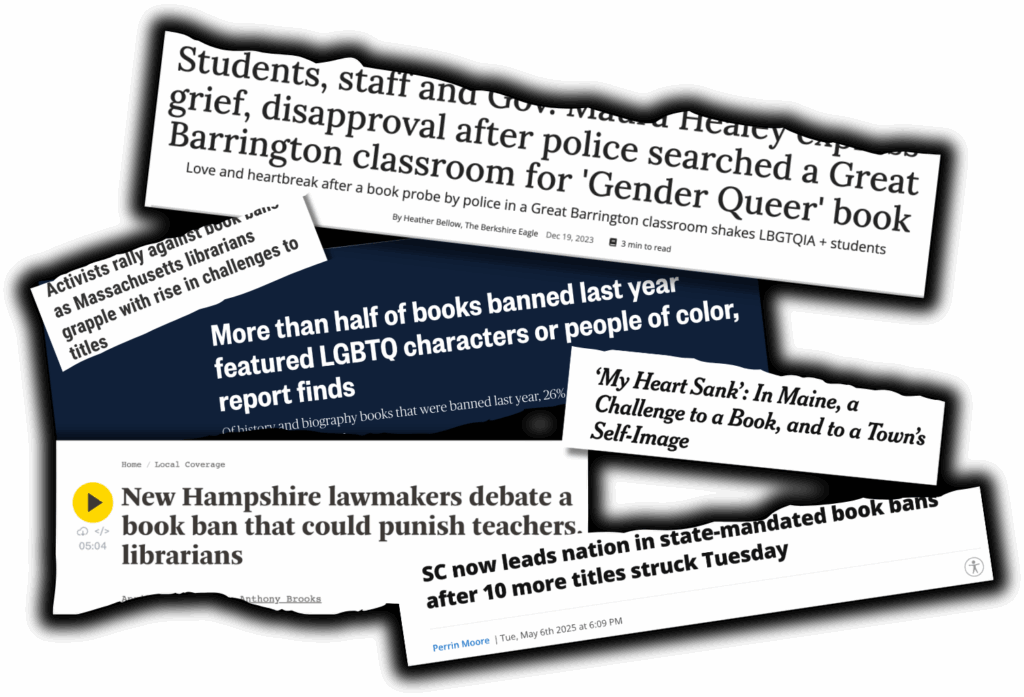
Caption: Read ‘The State of America’s Libraries: A Snapshot of 2024’ from the American Library Association.
Whose Stories are Being Silenced?
More than 2,400 books were challenged in the United States in 2024, according to the American Library Association (ALA). Among these books are stories by and about LGBTQIA+ people and Black people, as well as texts that contain sexual content and profanity. The ALA reports that the top three reasons reported for book challenges include sexual content, ‘offensive language,’ and perceived unsuitability for readers of any age. Often, objections to so-called unsuitable content target materials that represent diverse worldviews and experiences, and as a result, books that offer essential mirrors for minoritized students are increasingly being removed from school and classroom libraries.
A July 2025 report from the National Council of Teachers of English (NCTE) suggests that, though proponents of curricular censorship believe that schools are promoting radical ideas and providing access to explicit materials, K-12 students are largely reading the same texts that students have been assigned for decades. In fact, the top five texts English teachers reported teaching in their classrooms come directly from the traditional English literary canon, and all were written by white men. The most recent publication among them? Arthur Miller’s The Crucible, published in 1953.
“The harms inflicted on our freedom to read by organized censorship campaigns can be seen in the numbers. From 2001–2020, during the two decades prior to the start of the organized censorship campaign, an average of 46 titles were challenged per year by pressure groups, board members, administrators, and elected officials, who brought 2.8% of the total documented challenges. In 2024, these groups targeted 4,190 titles for censorship, 71.6% of the total documented; these were primarily books addressing the lives, experiences, and concerns of LGBTQIA+ persons, or books addressing the lives, experiences, and concerns of Black persons, Indigenous, persons, and persons of color” (2).
Banned Books Week 2025: October 5 – 11
Each year, Banned Books Week highlights the troubling nature of censorship and the importance of free access to information. As book challenges and bans continue to be a pervasive problem in schools and libraries, we all have an important role to play in ensuring that students – especially those who have not historically seen themselves represented in school knowledge – have access to diverse and authentic mirrors, windows, and doors.
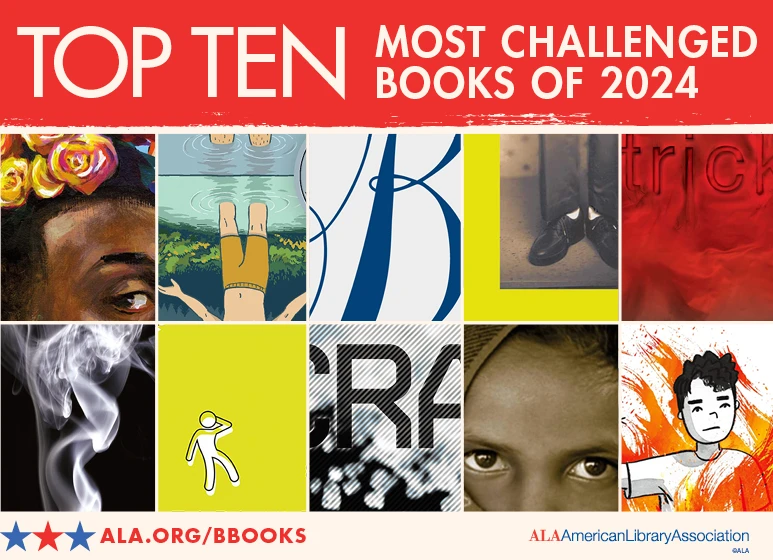
Caption: Figure Courtesy of The American Library Association, 2025. Visit ALA.org/BBooks for more information about book challenges, bans, and censorship.
Footnotes:
- School Library Journal. (2023). SLJ Controversial Book Survey: 2022-2023 Data Comparisons.
- Caldwell-Stone, D. (2025). Freedom to read continues to come under fire. “The State of America’s Libraries: A Snapshot of 2024. American Library Association“.